The Penny’s Demise: What the Founders Warned Would Happen

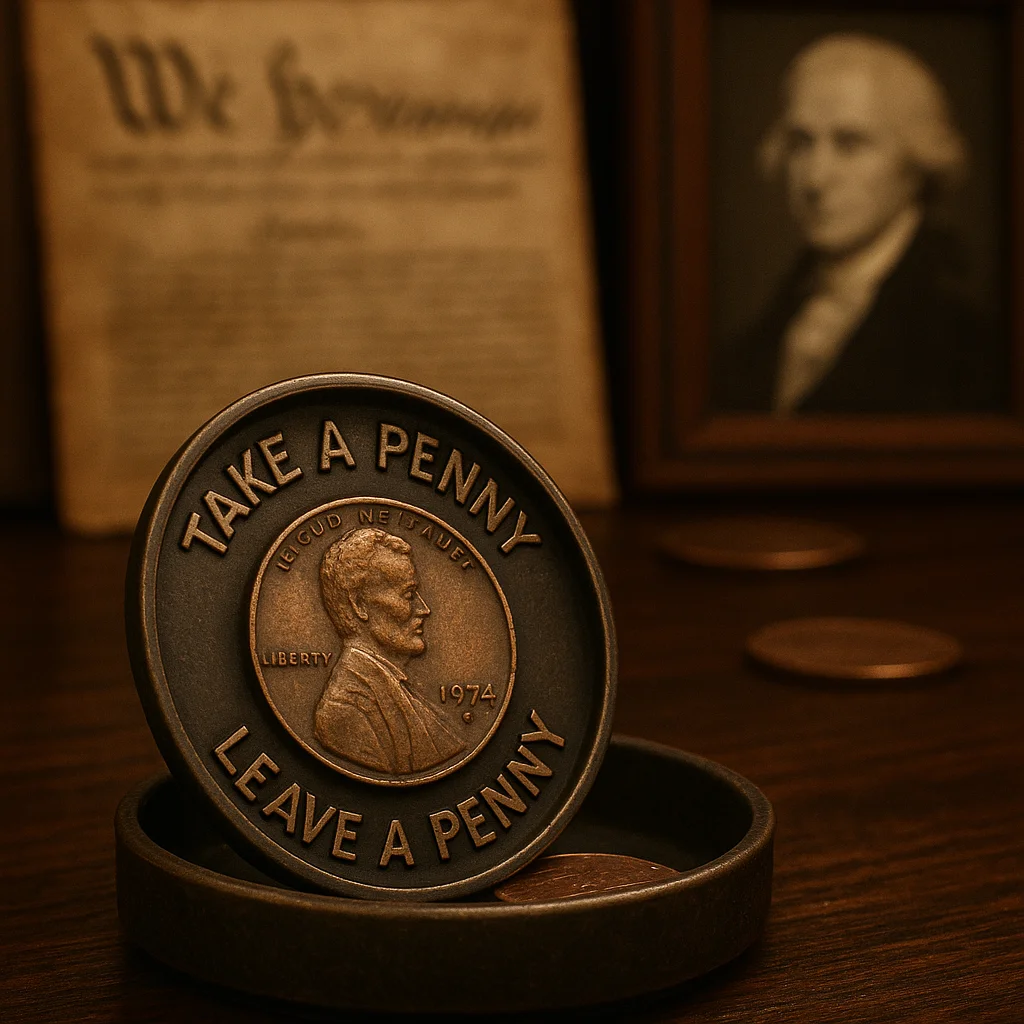
Update, September 2026: The final circulating U.S. penny was struck on November 12, 2025. Pennies already in circulation remain legal tender, and the Mint continues limited collectible production. I’ve updated a few factual details while preserving the argument of the original article.
The end of the penny might seem like a small thing, but to me it symbolizes something much larger: the steady erosion of the dollar’s purchasing power.
The coin itself didn’t suddenly become useless. It became less useful over generations because a cent buys almost nothing anymore. That makes the penny a convenient little metal reminder of what inflation does over time.
From Sound Money to Paper Promises
The Constitution expressly gives Congress the power to “coin Money” and regulate its value. It also prohibits the states from coining money, emitting bills of credit, or making anything other than gold and silver coin a tender in payment of debts.
That distinction matters. Article I, Section 10’s gold-and-silver restriction applies to the states, not directly to the federal government. The Constitutional Convention also debated federal paper money and voted to remove explicit language authorizing Congress to “emit bills.” The Supreme Court later held that Congress nevertheless has authority to issue paper legal tender under its other constitutional powers.
So I’m not claiming the Constitution contains a simple sentence saying “federal paper money is forbidden.” It doesn’t. What is clear is that many people in the Founding generation had lived through disastrous paper-money experiments and were deeply suspicious of repeating them.
Washington Had Seen This Movie Before
George Washington saw the problem firsthand. In a January 1787 letter to Jabez Bowen, he wrote that paper money had the effect of ruining commerce, oppressing honest people, and opening the door to fraud and injustice.
That isn’t a meme quote floating around the internet. The letter survives in the National Archives’ Founders Online collection.
Thomas Jefferson used similarly colorful language in an 1788 letter, describing paper as “the ghost of money.” Again, he was writing from a world that had seen paper promises collapse in value.
James Madison, in Federalist No. 44, warned about the “pestilent effects of paper money” on public confidence, private trust, industry, morals, and republican government.
The Drift Away from Monetary Restraint
America’s monetary system changed dramatically over time. Congress created the Federal Reserve in 1913. In 1933, the federal government sharply restricted private monetary gold ownership and redemption. In 1971, President Richard Nixon ended the dollar’s remaining convertibility into gold for foreign governments.
From there, the dollar became a fully fiat currency: its value rests on law, economic output, monetary policy, taxation, and public confidence rather than a promise to redeem each dollar for a fixed amount of metal.
Supporters of fiat money can point to real advantages, including flexibility during financial crises and an elastic money supply. My problem is that flexibility can also become an excuse for permanent monetary expansion, larger debts, and a slow erosion of purchasing power that people are expected to treat as normal.
Inflation Is Quiet Because It Happens a Little at a Time
Inflation doesn’t usually arrive with a notice saying, “Congratulations, your money is worth less today.” It shows up as groceries costing more, rent rising, savings buying less, and wages having to chase prices.
Economists can argue endlessly over causes, tradeoffs, and the proper inflation target. But the lived result is simple: a dollar that bought something meaningful decades ago buys less now.
The penny is the almost comical endpoint of that process. By 2025, the Mint said it cost 3.69 cents to manufacture a one-cent coin. That’s not the penny failing at its job. That’s a one-cent unit becoming too small to be worth manufacturing for everyday commerce.
From Cents to Sense
When you step back, the death of the circulating penny is a small story inside a much bigger one. Ending production was logical. The more interesting question is why the smallest unit of our currency became economically irrelevant.
I don’t think the answer requires pretending every monetary problem has one cause, or that returning to gold tomorrow would magically solve everything. But I do think the Founders’ suspicion of easy paper money deserves more respect than it usually gets.
They understood something basic: money depends on trust, and governments are not immune from the temptation to promise more than they can sustainably deliver.
The Real Fix
For me, “sound money” is less about carrying gold coins in a pouch and more about restraint, accountability, and protecting purchasing power.
Whatever system we use, people should be able to save without assuming that steady loss of purchasing power is simply the price of admission.
The penny is gone from new everyday production. Existing pennies will linger for years. The bigger question is whether the dollar itself will keep shrinking until today’s nickel, dime, or quarter eventually looks just as pointless. If you want the alternative case, I also wrote about five advantages Bitcoin has over fiat currency.
The Founders didn’t leave us a complete monetary policy manual. They did leave us plenty of warnings about paper promises, political temptation, and the importance of public trust. Those warnings are still worth reading.